
AI Tools Updates (March 2026): Top 10 Massive Upgrades You Need to Know
Updated March 14, 2026 • 7-10 min. read
The first quarter of 2026 has completely reshaped the AI landscape. We have moved past simple chatbots; the new standard is autonomous agents, massive context windows, and native computer integration. If you want to stay ahead of the curve regarding the biggest AI tools updates March 2026 has to offer, here are the top 10 releases you need to know about.
| AI Tool (March 2026) | Biggest Core Update | Best Used For | Availability |
|---|---|---|---|
| 1. GPT-5.3 Instant | “Anti-Cringe” & -26% Hallucinations | Everyday Chat & Fast Search | 🟢 Free Default |
| 2. GPT-5.4 (Thinking) | Native Computer Use & 1M Tokens | Autonomous Tasks & Coding | 🔒 Paid (Plus/Pro) |
| 3. Claude 4.6 | Claude Code & Multi-Agent Delegation | Software Engineering & Writing | 🟢 Free / 🔒 Paid |
| 4. Gemini 3.1 Pro & Nano 2 | Web Optimization & “Redo with Pro” | Web Workflows & Visual Arts | 🟢 Free / 🔒 Paid |
| 5. DeepSeek V4 | Advanced MoE & Radical Price Drop | Open-Source Dev & Cheap API | 🟢 Free / Open-Source |
| 6. Sora 2 | Character Continuity & Lip-Sync | Cinematic Filmmaking | 🔒 Paid (Strictly) |
| 7. Qwen 3.5 | 2-Hour Video Ingestion & Scrubbing | Long-Form Video Analysis | 🟢 Open-Source |
| 8. Zapier Agents | Goal-Oriented Autonomous Workflows | Business Automation | 🟢 Free / 🔒 Paid |
| 9. Kimi 2.5 & Slides | 2M Tokens & Zero-Click PPTX Slides | Corporate Presentations | 🟢 Free / 🔒 Paid |
| 10. ElevenLabs Engine | Mid-Sentence Emotion Modulation | Pro Audio & Video Dubbing | 🟢 Free / 🔒 Paid |
1. GPT-5.3 Instant: Faster, More Accurate, and Way Less “Cringe”
GPT-5.3 Instant is now the default engine powering ChatGPT. OpenAI designed this update specifically to address the most common user complaints from the past year: overly wordy responses, unnecessary moralizing, and factual errors.
The Key Progress and Features:
- The “Anti-Cringe” Update: OpenAI explicitly trained this model to cut out the overly defensive, preachy preambles. It no longer treats simple prompts like a crisis, reducing the unnecessary “Stop and take a breath” disclaimers. It gives you the direct answer without the lecture.
- Massive Drop in Hallucinations: Factuality got a major boost. GPT-5.3 Instant reduces hallucination rates (making things up) by 26.8% when searching the web, and by 19.7% when relying purely on its internal knowledge base.
- Smoother Conversational Flow: Instead of giving you a giant, robotic list of web links, the model now actively synthesizes information so it feels more like chatting with a knowledgeable human rather than a search engine.
Availability (Free or Paid?):
- Free for Everyone: GPT-5.3 Instant is available to all users, including those on the free tier. It has completely replaced GPT-5.2 Instant as the default model when you open the app or website.
2. GPT-5.4 (Thinking & Pro): The 1-Million Token Autonomous Agent
While 5.3 Instant is built for chatting, GPT-5.4 is built for doing. This is OpenAI’s new flagship frontier model, merging their advanced reasoning capabilities with the coding power of Codex. It represents a massive leap toward AI agents that work autonomously.
The Key Progress and Features:
- Native Computer Use: This is the biggest game-changer. GPT-5.4 is the first mainline OpenAI model with built-in computer-use capabilities. It can visually read your screen, send mouse clicks, and use keyboard shortcuts to operate external software, websites, and apps on your behalf.
- Mid-Response Steering: Have you ever watched ChatGPT start typing a long answer and realized halfway through that it’s going in the wrong direction? With GPT-5.4 Thinking, you no longer have to hit “stop” and rewrite your prompt. You can now interrupt the model mid-thought, add new instructions, and watch it seamlessly adjust its final answer on the fly.
- 1-Million Token Context Window: The API version of 5.4 now supports over 1 million tokens. This means you can upload massive codebases, entire books, or hundreds of legal documents, and the model will retain the context perfectly without forgetting the beginning of the conversation.
- Unmatched Factual Efficiency: For professional work (spreadsheets, financial modeling, legal analysis), it is incredibly precise. Individual claims made by GPT-5.4 are 33% less likely to be false compared to the previous generation.
Availability (Free or Paid?):
- Strictly Paid: The GPT-5.4 family is locked behind OpenAI’s premium tiers.
- GPT-5.4 Thinking: Available to ChatGPT Plus, Team, and Pro subscribers.
- GPT-5.4 Pro: The maximum-performance version is reserved exclusively for the high-end Pro and Enterprise plans.
2. Claude 4.6 (Opus & Sonnet): The 1-Million Token Developer’s Dream
Released in February 2026, Anthropic’s Claude 4.6 family has firmly established itself as the undisputed king of deep context and software engineering. While other companies focused on flashy consumer features, Anthropic doubled down on making Claude the ultimate, highly secure AI for enterprise developers, data scientists, and long-form writers.
The Key Progress and Features:
- The 1-Million Token Context Window: Claude 4.6 now supports a staggering 1,000,000 tokens out of the box. You can upload an entire company’s codebase, dozens of financial reports, or a multi-book series, and the model will recall specific, buried details flawlessly without losing the thread of your conversation.
- Claude Code & Multi-Agent Delegation: This is the standout feature for 2026. Claude Code allows the AI to act directly within a developer’s local terminal. Even more impressively, it introduces multi-agent delegation—meaning Claude can spawn “sub-agents,” assigning frontend work to one AI and backend database structuring to another, while seamlessly overseeing the entire project.
- Advanced “Human-Like” Phrasing: Anthropic has further refined its writing capabilities. Claude 4.6 Opus remains the absolute best model on the market for generating text that actually sounds human, intentionally avoiding the repetitive, robotic AI buzzwords (like “delve,” “tapestry,” or “testament”) that plague other platforms.
Availability (Free or Paid?):
- Claude 4.6 Sonnet (Free/Standard): Available to all users on the free tier. It offers lightning-fast speeds, top-tier coding capabilities, and the massive context window for everyday, heavy-duty tasks.
- Claude 4.6 Opus (Strictly Paid): The maximum-reasoning, heavy-weight model is locked behind the Claude Pro and Team subscriptions. It is specifically designed for complex, multi-step problem solving and advanced strategic planning.
3. Gemini 3.1 Pro & Nano Banana 2 (Google): The Ultimate Web and Visual Powerhouse
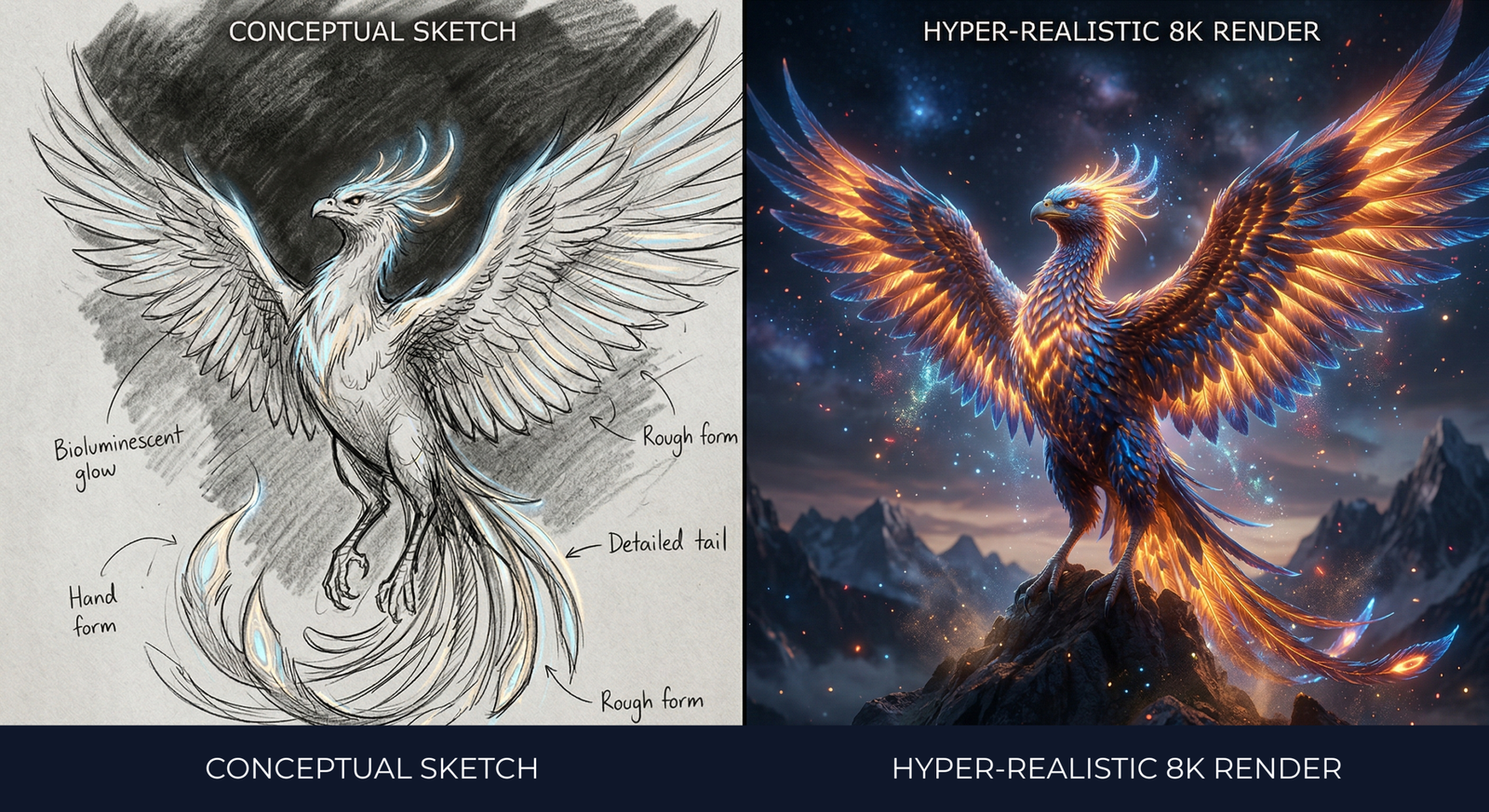
Google’s new Nano Banana 2 image generator allows users to rapidly prototype an idea, then use the ‘Redo with Pro’ feature for maximum visual fidelity.
Google’s early 2026 update brought a massive dual-release that completely transformed its AI ecosystem. By combining the highly advanced Gemini 3.1 Pro language model with their brand-new, state-of-the-art image generator, Nano Banana 2, Google has created an all-in-one platform built specifically to dominate web-based workflows and visual content creation.
The Key Progress and Features:
- Gemini 3.1 Pro (Web Optimization): Designed from the ground up for the Web, Gemini 3.1 Pro handles highly complex features and analysis. Its standout upgrade is the significantly extended conversation length, allowing it to maintain deep, continuous context over massive sessions without dropping details.
- Nano Banana 2 (Gemini 3 Flash Image): This is Google’s new state-of-the-art visual model, officially replacing the older Nano Banana models in the Gemini app. It excels not just in standard text-to-image generation, but in complex image+text-to-image editing, and multi-image-to-image tasks (allowing for flawless composition and style transfer between multiple reference photos).
- The “Redo with Pro” Workflow: For visual artists and designers who need maximum fidelity, Google introduced a unique workflow. You can rapidly generate a concept using the blazing-fast Nano Banana 2, and once you have the perfect composition, you can simply click the three-dot menu and select “Redo with Pro” to upgrade the image using the heavier, professional-grade model.
Availability (Free or Paid?):
- Gemini 3.1 Pro (Strictly Paid): This advanced model operates exclusively in the Paid tier, reserved for users who need complex, long-form problem solving and extended capabilities.
- Nano Banana 2 (Free & Paid): The base Nano Banana 2 model is available to all users, including those on the Basic (free) tier.
- Nano Banana Pro (Strictly Paid): The high-fidelity “Redo with Pro” feature is locked entirely behind Google’s premium subscriptions, accessible only to AI Plus, Pro, and Ultra users.
4. DeepSeek V4: The Open-Source Price Disruptor
In early March 2026, the AI industry experienced a seismic shift with the release of DeepSeek V4. Developed in China, this open-source powerhouse proved that you don’t need a massive Silicon Valley budget to achieve state-of-the-art intelligence. It matched the performance of top-tier proprietary models and completely disrupted the market’s pricing standards, forcing competitors to rethink their strategies.
The Key Progress and Features:
- Top-Tier Reasoning at a Fraction of the Cost: DeepSeek V4 rivals the logical, mathematical, and coding benchmarks of flagship models like GPT-5 and Claude 4.6, but operates at a remarkably low inference cost. This extreme efficiency has forced major tech giants to slash their API prices to stay competitive.
- True Open-Source Accessibility: Unlike closed, proprietary ecosystems, V4’s weights are available for developers to download, modify, and run locally or on their own cloud infrastructure. This gives enterprises and indie developers complete control over their data privacy and customization.
- Advanced Mixture-of-Experts (MoE) Architecture: The V4 update heavily optimized its MoE routing. This means the model only activates the specific neural pathways needed for a given prompt, resulting in lightning-fast response times without sacrificing the depth or accuracy of its answers.
Availability (Free or Paid?):
- Free for End Users: Casual users can access the highly capable V4 model entirely for free through the DeepSeek web interface and mobile app.
- Incredibly Cheap API (Pay-as-you-go): For developers and businesses building apps, the API access is revolutionary. It offers high-tier token limits at a cost that is often 80% to 90% cheaper than equivalent Western enterprise models.
5. Sora 2 (OpenAI): The Cinematic Storytelling Engine
Following the viral success of its predecessor, OpenAI released Sora 2 in early 2026 with a massive shift in focus: moving from short, disjointed clips to true, long-form cinematic storytelling. It transformed AI video generation from a neat visual trick into a legitimate pre-production powerhouse for filmmakers, marketers, and creators.
The Key Progress and Features:
- Character and Emotional Continuity: Sora 2 solved the biggest problem of early AI video. It can now “lock” a character’s exact appearance, clothing, and emotional state across multiple different camera angles, locations, and scenes, ensuring flawless continuity throughout a short film.
- Native, Synchronized Dialogue: You no longer need to rely on third-party audio tools to voice your generated actors. Sora 2 can generate native, high-fidelity dialogue that perfectly syncs with the characters’ lip movements and naturally matches the acoustic environment of the scene (like adding subtle echoes in a large hall).
- Director’s Mode (Camera & Physics Control): Creators can now step into the director’s chair by prompting specific camera lenses (e.g., “50mm anamorphic”), complex lighting setups, and strict real-world physics constraints. This gives users granular control over the final composition rather than just rolling the dice on random generation.
Availability (Free or Paid?):
- Strictly Paid & Rate-Limited: Due to the massive compute power required for high-fidelity cinematic rendering, Sora 2 is locked behind OpenAI’s premium tiers. It is exclusively available to top-tier ChatGPT Pro and Enterprise users, as well as select studio partners.
- Mandatory Watermarking: To ensure digital trust, all videos generated by the Sora 2 engine include immutable C2PA metadata and subtle, mandatory visual watermarking to identify them as AI-generated.
If you want to put these video and audio generators into practice, check out our complete guide on [How to Build a Faceless YouTube Channel in 2026 Using Only Free AI tools].
6. Qwen 3.5 (Alibaba): The Heavyweight of Long-Form Video Analysis
Alibaba’s massive mid-February 2026 update brought a killer feature to the multimodal AI race that left competitors scrambling: extreme, long-form video processing. While other models focused on generating short clips or analyzing static images, Qwen 3.5 was engineered to ingest, understand, and index massive amounts of visual and audio data simultaneously.
The Key Progress and Features:
Agentic Surveillance & Scrubbing: Qwen 3.5 is highly optimized for AI agent frameworks. Developers are using it to build autonomous agents that can scrub through endless hours of security footage, body-cam recordings, or unedited podcast video to find specific anomalies or create highlight reels without human intervention.
2-Hour Video Ingestion: This is its undisputed superpower. Qwen 3.5 can analyze up to 120 minutes of continuous video in a single prompt. It doesn’t just look at keyframes; it comprehends the overarching narrative, tracks specific objects over time, and can instantly jump to exact timestamps when answering user questions.
Cross-Lingual Audio-Visual Sync: It inherently understands the relationship between what is happening on screen and what is being said. You can upload a two-hour documentary in French and ask the model to generate a detailed, time-stamped summary in English, complete with visual descriptions of the scenes.
Availability (Free or Paid?):
- Open-Source Weights (Free to Download): The core weights for Qwen 3.5 are open-source and freely available, allowing researchers, indie developers, and enterprises to download and run the model locally on their own hardware.
- Enterprise API (Pay-as-you-go): For businesses that do not want to manage their own massive GPU clusters, Alibaba Cloud offers a highly scalable, pay-per-token API that is aggressively priced to undercut major Western alternatives.
7. Zapier Agents: The End of Rigid Workflows
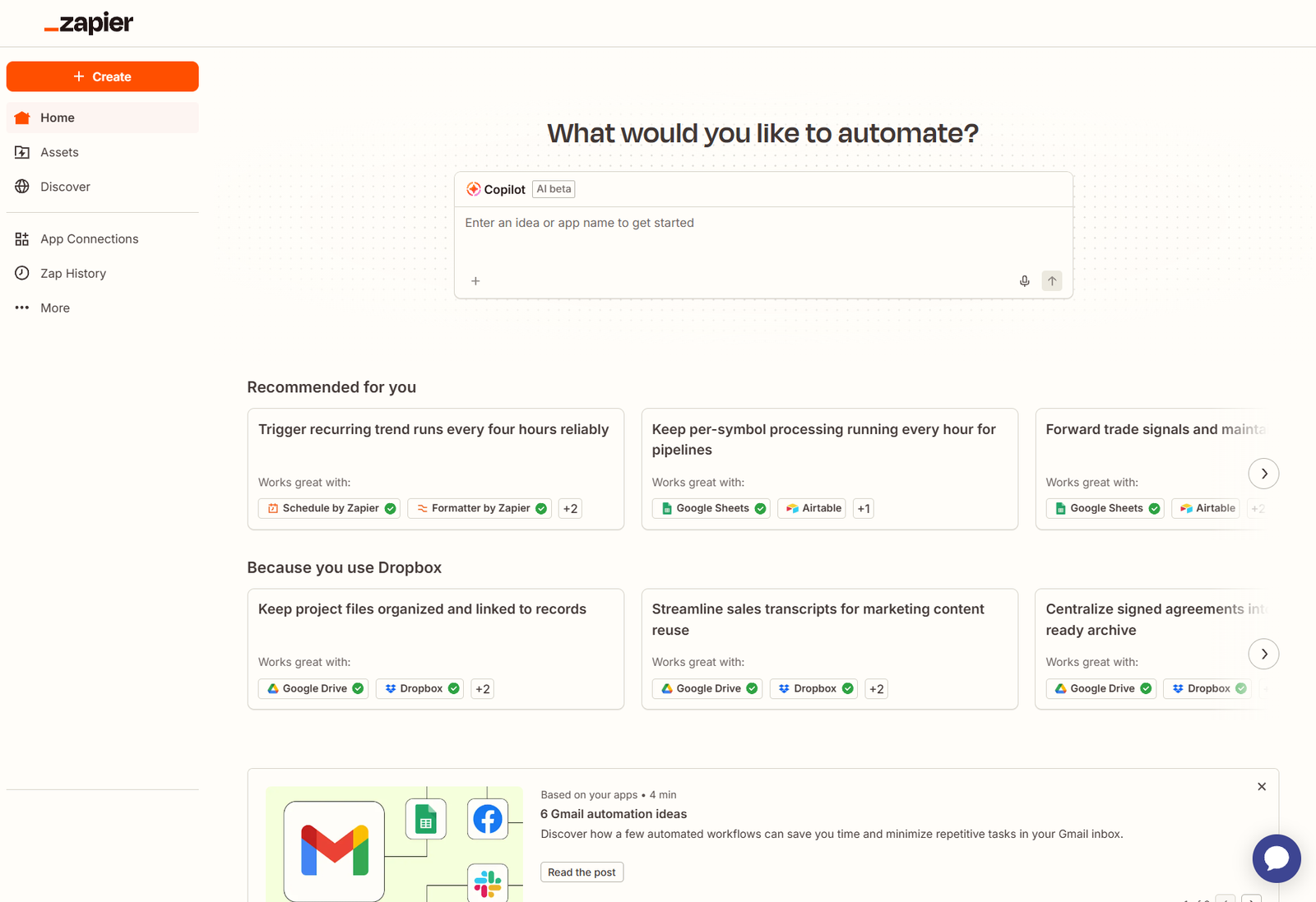
The new Zapier dashboard featuring the AI-powered Copilot for goal-oriented automation (March 2026).
For years, Zapier was the undisputed king of “if-this-then-that” automation. If you received an email, Zapier could automatically copy the attachment to Google Drive. But in early 2026, Zapier fundamentally evolved from a simple trigger-and-action platform into a hub for fully autonomous AI workers, reshaping how businesses handle repetitive tasks.
The Key Progress and Features:
Human-in-the-Loop Oversight: To prevent AI from making costly mistakes (like sending the wrong email to a VIP client), Zapier introduced a robust approval system. Agents can pause their work, summarize what they are about to do, and wait for a human manager to click “Approve” before executing the final, critical step.
Goal-Oriented Automation: You no longer need to map out every single step of a workflow. Instead of building a complex 15-step “Zap,” you simply give a Zapier Agent a plain-English goal—for example, “Find new tech leads from this spreadsheet, research their company news, and draft a personalized outreach email in a Google Doc.”
Dynamic App Navigation: Zapier Agents are not constrained by fixed paths. If an agent tries to pull data from a CRM but finds a missing email address, it can autonomously decide to open LinkedIn, search for the person, retrieve the missing info, and then return to the CRM to finish the job without human intervention.
Availability (Free or Paid?):
- Basic Agent Access (Free Tier): Zapier allows free users to build and test simple, single-purpose agents to automate basic personal tasks.
- Advanced Multi-Agent Teams (Paid Subscriptions): Unlocking the true power—where multiple agents collaborate, hand off tasks to each other, and connect to enterprise-grade software (like Salesforce or custom internal databases)—requires a paid Zapier Professional or Team plan.
Zapier is just the beginning of agentic workflows. To discover more ways to boost your efficiency, read our breakdown of [7 AI Tools That Can Replace Hours of Manual Work].
8. Kimi 2.5 & Kimi Slides (Moonshot AI): The Corporate Analyst’s Dream
Developed by Moonshot AI and launched in late January 2026, Kimi 2.5 quickly became a viral sensation in the corporate world. While other AI models were trying to write code or generate cinematic videos, Kimi focused on solving a massive, universally dreaded problem for business professionals: summarizing immense documents and turning them into presentable, boardroom-ready slides.
The Key Progress and Features:
Flawless Formatting and Localization: Unlike older models that struggled to place text inside presentation boxes, Kimi Slides perfectly aligns elements. Furthermore, it natively understands and accurately formats deep-market research in over 50 languages, making it incredibly popular for multinational teams.
The 2-Million Token “Long Context” King: Kimi 2.5 was built specifically to ingest staggering amounts of text. You can upload an entire company’s annual financial report, years of legal contracts, and multiple massive PDFs simultaneously, and the model will parse the data without forgetting the details.
Kimi Slides (Zero-Click Presentations): This is the killer feature that made Moonshot AI famous. Instead of generating a generic text outline that you then have to copy-paste into PowerPoint, Kimi 2.5 actually generates the entire presentation file (in PPTX format). It creates dense, corporate-ready slides complete with accurate data graphs, pie charts, and professional layouts based directly on the documents you uploaded.
Availability (Free or Paid?):
- Kimi 2.5 Chat (Generous Free Tier): The core long-context chat interface is available to all users for free, with surprisingly high daily limits, making it a favorite among students and researchers.
- Kimi Slides Pro (Paid Subscription): Generating fully customized, branded presentations with proprietary company templates, custom fonts, and high-resolution data visualizations is locked behind the Kimi Pro tier.
ZProcessing large corporate files is becoming a standard feature. For a deeper dive, learn [How To Automate Document Summaries Using AI Tools] effectively.
9. Databricks AI/BI (Genie): The Democratization of Enterprise Data
In February 2026, Databricks fundamentally shifted how companies interact with their own data. The massive update to their AI/BI Genie platform eliminated the traditional bottleneck of waiting for data engineering teams to write complex SQL queries. Genie now allows anyone in a company—from CEOs to marketing managers—to converse directly with their enterprise databases using plain English.
The Key Progress and Features:
Verifiable “Under-the-Hood” Logic: The biggest fear with AI in business is hallucinated data. Genie solves this by being deeply integrated into the Databricks unified data catalog. It transparently displays the exact SQL code it generated to get the answer, ensuring that technical teams can verify and trust the output at any time.
Conversational Data Querying: Genie learns the specific jargon, KPIs, and metrics unique to your business. A product manager can simply ask, “Why did our user churn rate spike in Europe last quarter?” and Genie will autonomously navigate the company’s data tables, analyze the variables, and return a precise answer.
Instant, Interactive Dashboards: Instead of returning raw, confusing tables of numbers, Genie dynamically generates rich, interactive BI (Business Intelligence) charts on the fly. If you want to drill down into a specific demographic within that chart, you just ask a follow-up question, and the visual updates instantly.
Availability (Free or Paid?):
- Enterprise Only (Strictly Paid): Genie is not a standalone consumer application. It is deeply embedded into the Databricks Data Intelligence Platform and is available exclusively to paying enterprise customers.
- Usage-Based Pricing: Rather than a flat subscription, companies pay based on the server compute resources consumed when executing these complex AI queries, making it scalable depending on the size of the organization.
10. ElevenLabs Voice Engine (2026 Updates): Flawless Audio Empathy
In the first quarter of 2026, ElevenLabs solidified its absolute dominance in AI audio synthesis. While other platforms were still struggling with robotic cadences or unnatural pauses, the ElevenLabs Voice Engine introduced a level of granular emotional control that essentially gave their AI voices true acting ability, making them indistinguishable from human voice actors.
The Key Progress and Features:
Granular Acoustic Environment Control: The engine now understands space. You no longer have to apply third-party audio filters. You can simply prompt the AI to make the voice sound like it’s “echoing in a massive cathedral,” “muffled through a cheap phone line,” or “whispering intimately in a quiet studio,” and it instantly processes the acoustics natively.
“Emotional Modulation” Mid-Sentence: This is the groundbreaking feature of 2026. Previously, an AI voice maintained one static emotion. Now, directors and creators can highlight specific words or phrases and assign them precise emotions (e.g., start a sentence in an angry whisper, and end it in a sarcastic, loud tone). The transition is completely seamless.
Hyper-Realistic Lip-Sync Dubbing: ElevenLabs’ video dubbing feature became the industry standard for content localization. It analyzes the source video, translates the audio into over 45 languages, and automatically adjusts the length of the translated spoken words to perfectly match the on-screen actor’s lip movements—all while retaining the original speaker’s exact voice clone.
Availability (Free or Paid?):
- Generous Free Tier: Independent creators, students, and hobbyists can still access a robust library of voices and generate high-quality speech with a monthly character limit at absolutely no cost (requires attribution).
- Creator and Enterprise Subscriptions (Paid): The advanced features—like ultra-high fidelity Voice Cloning, commercial rights, the massive Emotional Modulation toolkit, and API access for real-time applications—are locked behind their scalable paid plans, ensuring they cater from small YouTubers up to AAA gaming studios.
Which of These AI Tools Updates (March 2026) Will You Try First?
The AI landscape is moving faster than ever, shifting from simple chatbots to fully autonomous agents. Whether you are coding with Claude 4.6, building workflows with Zapier, or creating visuals with Gemini, these updates will completely redefine your productivity. Pick one tool from the list, test its new limits, and start upgrading your daily workflow today.
Written By ToolChamber Editorial Team.